Mining Basin · UNESCO World Heritage

Mining heritage

Coal made Lens. In a single century, a market town of a few thousand people became the capital of one of France's largest mining companies. The last shaft has closed, but the landscape remains, and it is now a World Heritage Site.

From 1648 to the present day

A short history

1648

The Battle of Lens

Lens was then a small fortified town in Artois. The Grand Condé defeated the Spanish army here, a victory that paved the way for the region to become part of France.

1850the beginnings

Coal

In the 1840s, the westward extension of the Nord coalfield was discovered. The Lens Mining Company (Société des Mines de Lens) was founded in 1852. Pits multiplied, and with them came workers' housing, schools and churches. Lens had fewer than 3,000 inhabitants in 1851; by the early 1960s it had more than 40,000.

1914-1918

A town razed to the ground

The town remained occupied for four years, just behind the front line. By the end, almost nothing was left: more than 90% of Lens was destroyed and the shafts were flooded. See also Lens, a martyred town.

1920-1930

Reconstruction

The Company rebuilt its pits and housing estates, and the town rebuilt its centre. This was the golden age of Art Deco in Lens: the railway station, the Grands Bureaux, the church of Saint-Léger and the façades of Place Jean-Jaurès.

1946

Nationalisation

The mining companies were merged into the nationalised coal board, the Houillères du bassin du Nord et du Pas-de-Calais. The post-war “battle for coal” saw the workforce peak at over 220,000 miners around 1947.

1960-1990

Decline

One by one, the pits closed. Pit 9 in Lens stopped in 1960, the 11/19 at Loos-en-Gohelle in 1986. In 1990 the last lump of coal (gaillette) in the basin was brought to the surface at Oignies. More than 200,000 mining jobs had disappeared.

2012

World Heritage

On 30 June 2012, the Nord-Pas-de-Calais Mining Basin was inscribed on the UNESCO World Heritage List as an “evolving, living cultural landscape”: 353 elements spread over 120 km. In December, the Louvre-Lens opened on the pithead yard of pit 9.

Mountains of the flatlands

The slag heaps

Slag heaps (terrils) are the mine's waste: the rock brought up with the coal and tipped onto piles for decades. Around Lens they have become hills for walking, nature reserves and even a ski slope.

UNESCOFree access Loos-en-Gohelle · 4 km

The Twin slag heaps of the 11/19 pit

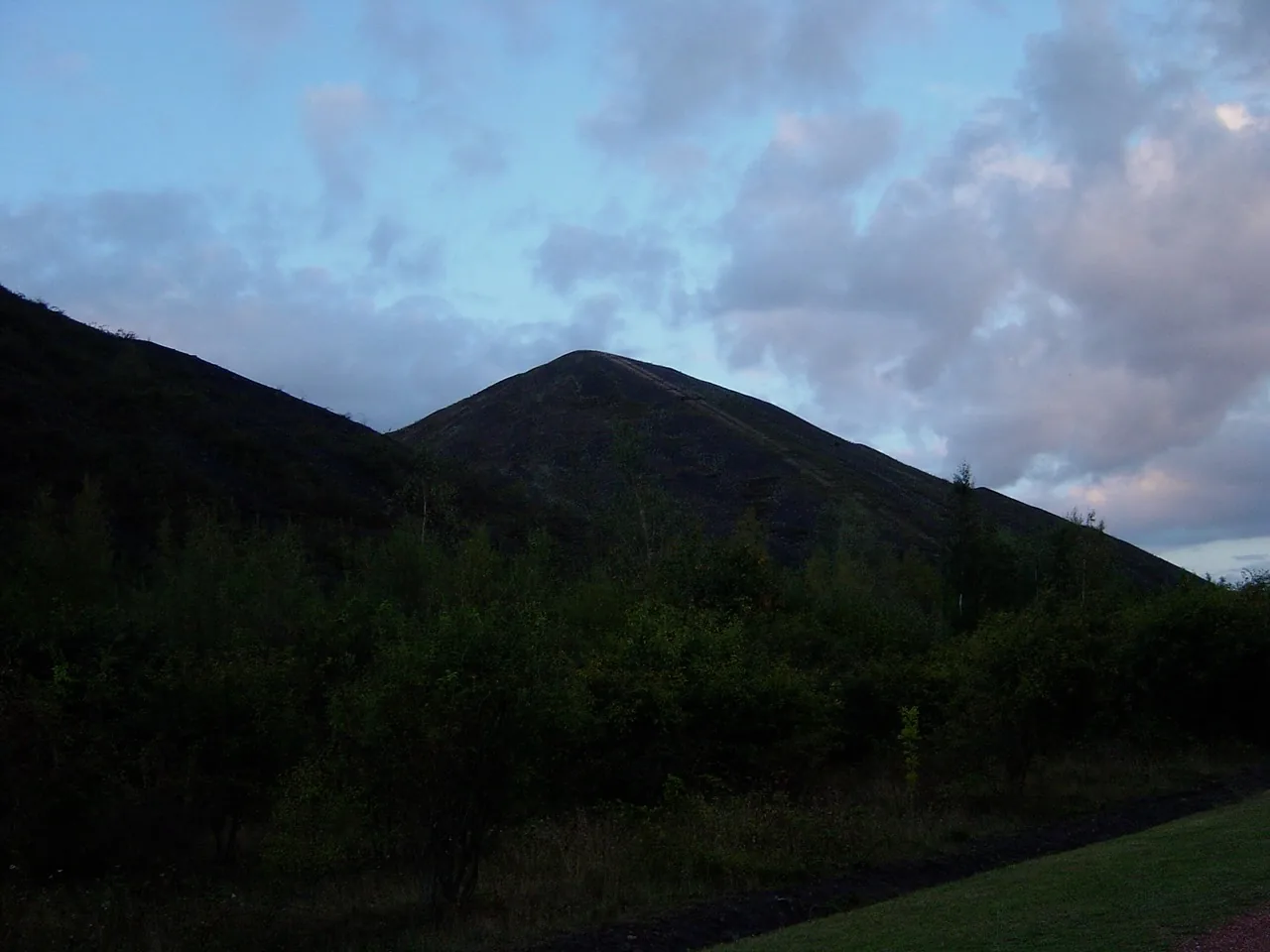
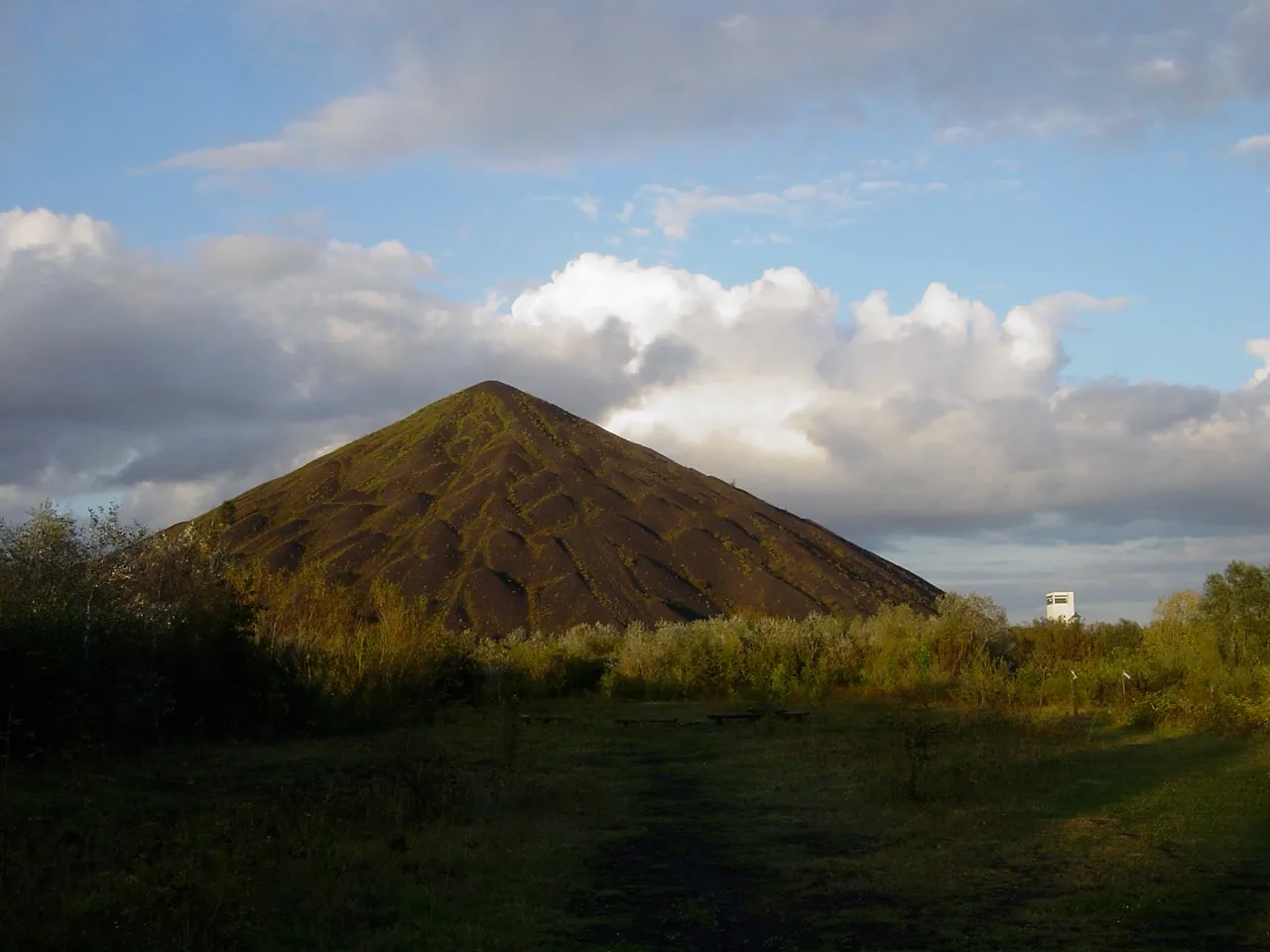
Two perfect cones rising to 186 metres above sea level, nearly 150 metres above the plain. They are billed as the highest slag heaps in Europe. You can see them from Vimy, from the motorway, from all over the basin. The climb up and back takes about an hour. A viewing platform halfway up already looks out over the plain and Lens.

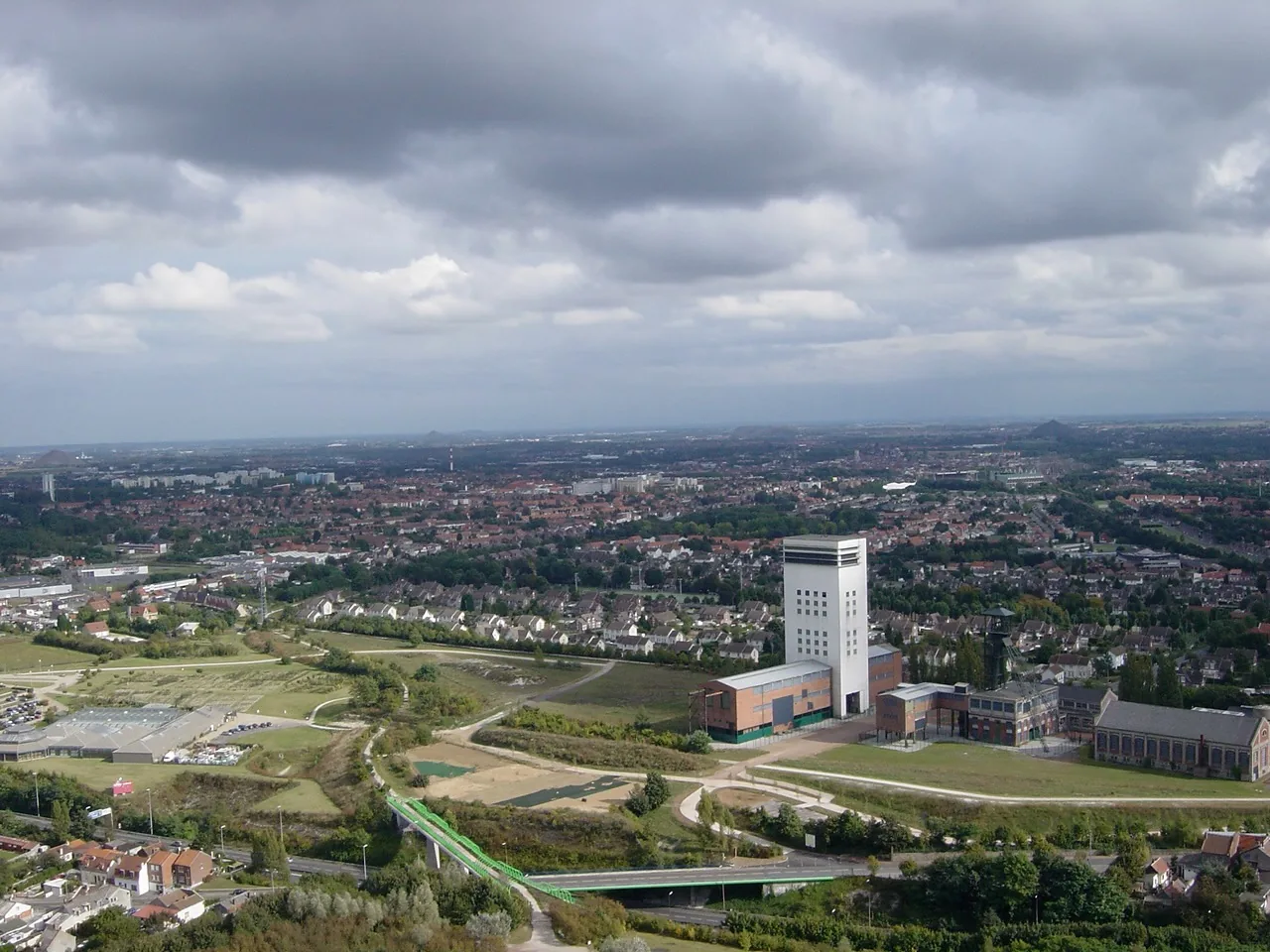
At their foot, Base 11/19 occupies the former pit, with its 66-metre concrete winding tower and the steel headframe of shaft 11. The pit closed in 1986 and is a listed historic monument. It is home to the Culture Commune national theatre and the CPIE Chaîne des Terrils, which runs free nature walks.

Free access Avion · Liévin · Givenchy

Pinchonvalles, the longest

This one is not about height: it is a long ridge of 1.75 kilometres, the longest slag heap in Europe. Built up from 1907 and protected since 1982, it is now a protected natural area managed by Eden 62.

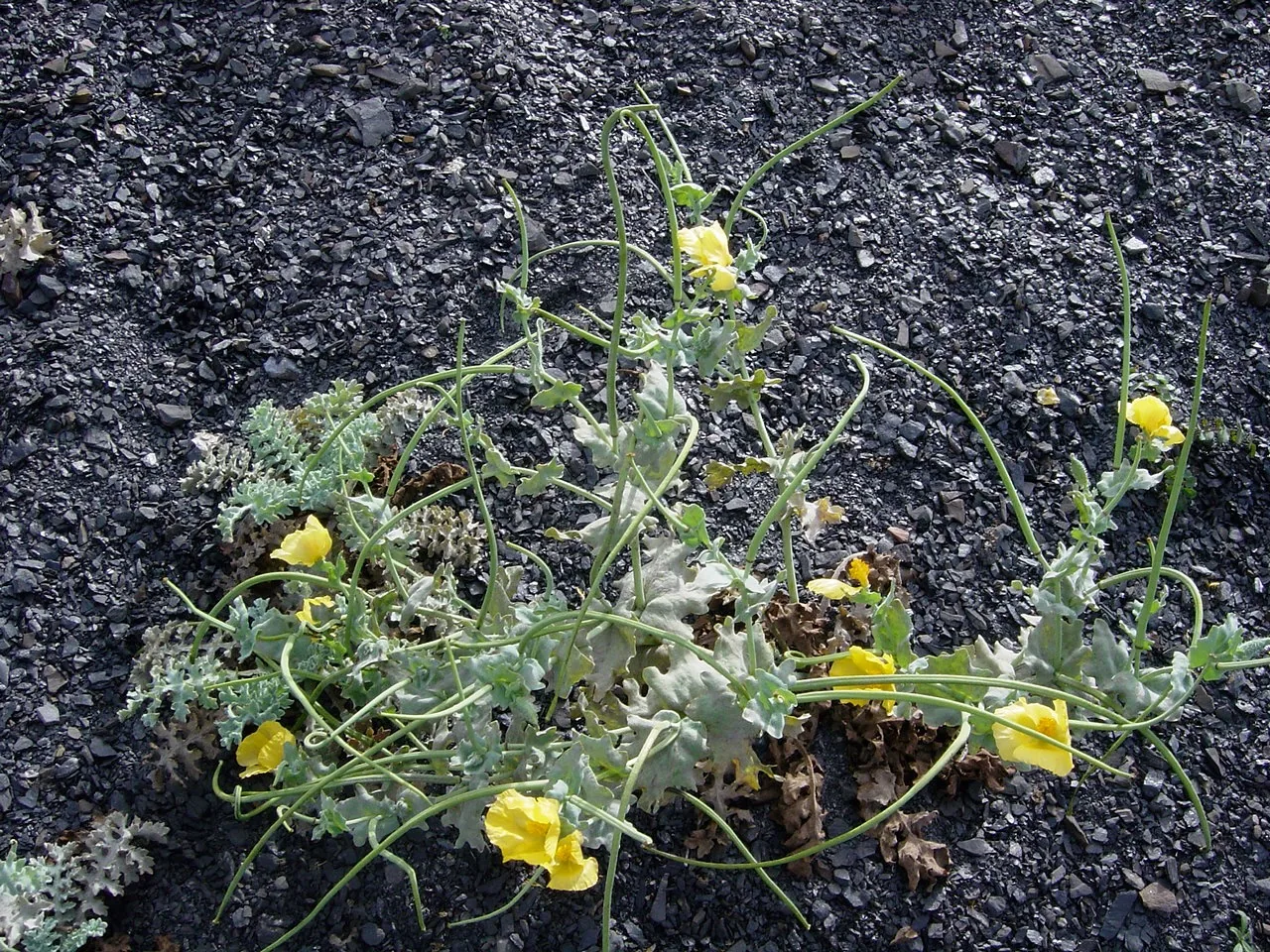
Three waymarked trails, from 1.6 to 3.6 km, cross some surprising vegetation. The black rock heats up in the sun, allowing plants and insects usually found further south to settle here.

Nœux-les-Mines · 20 km

Loisinord: skiing on a slag heap

Since 1996, a slag heap at Nœux-les-Mines has carried a 320-metre artificial ski slope, open all year round. At its foot, a 9-hectare lake offers cable waterskiing and swimming. It is the most spectacular symbol of the basin's reinvention.

Up on the 11/19
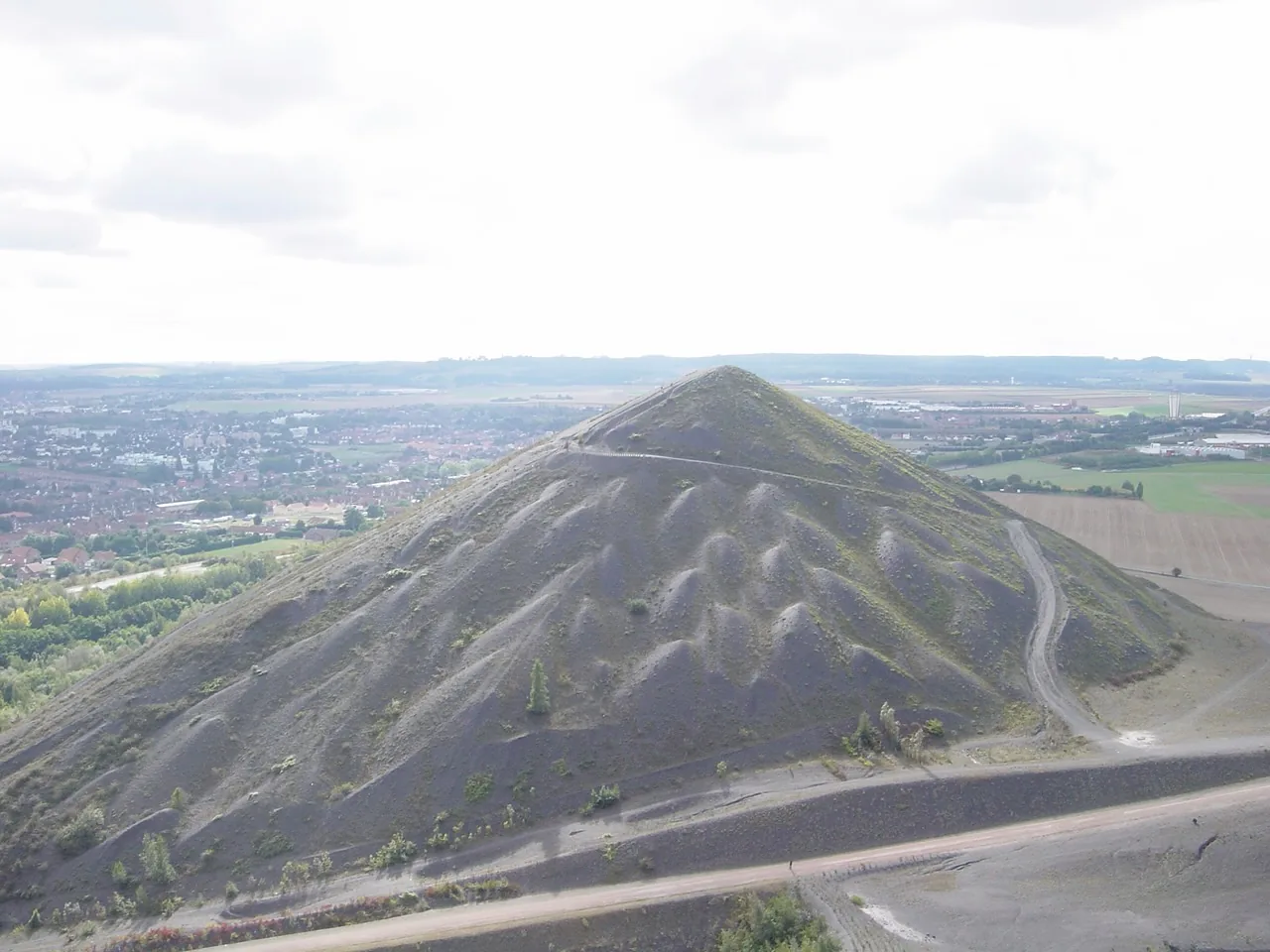
The second twin slag heap seen from the top of the first, with the plain in the background
From the top of the first slag heap: the second cone, its twin, with its shale gullies.

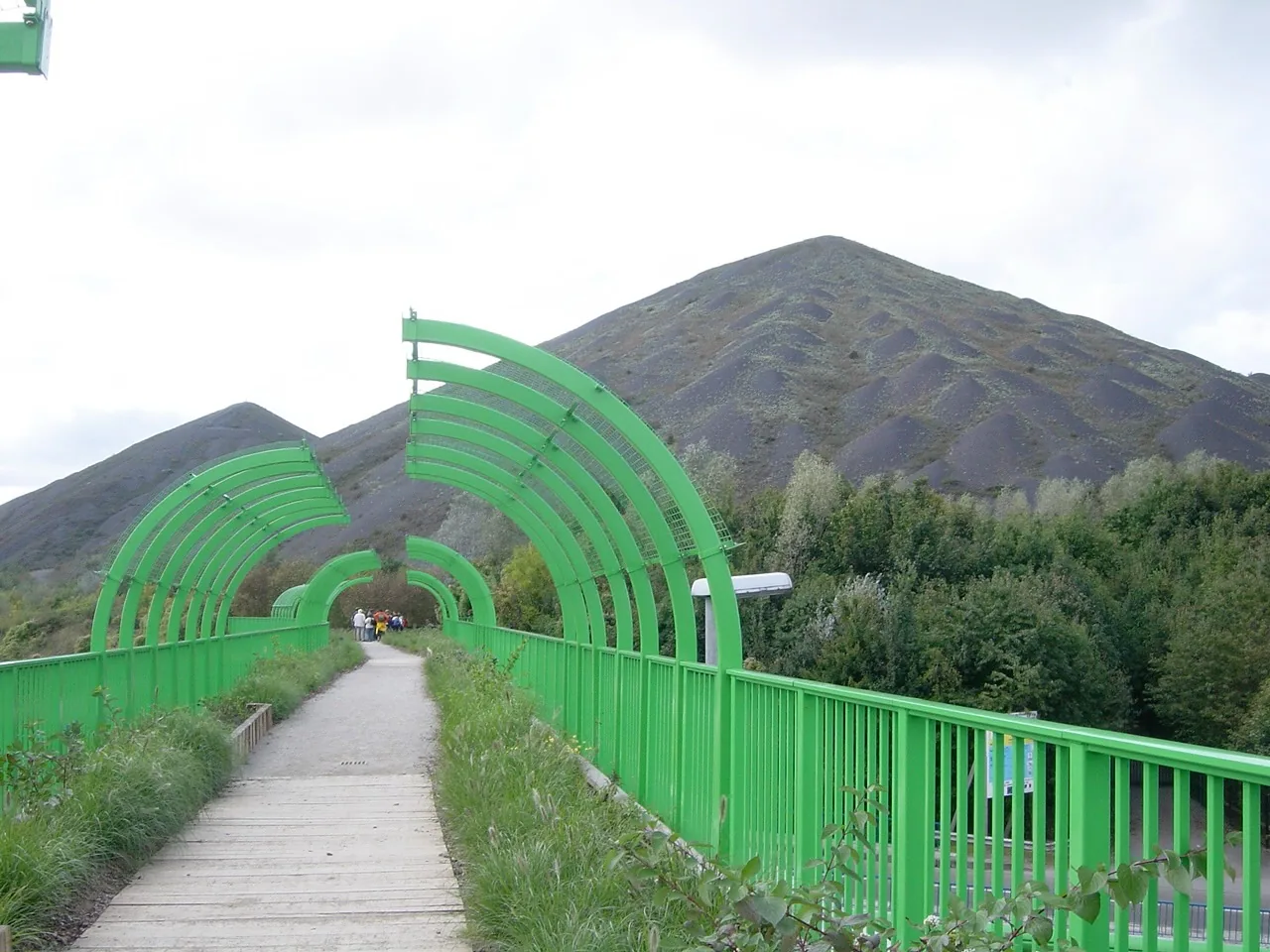
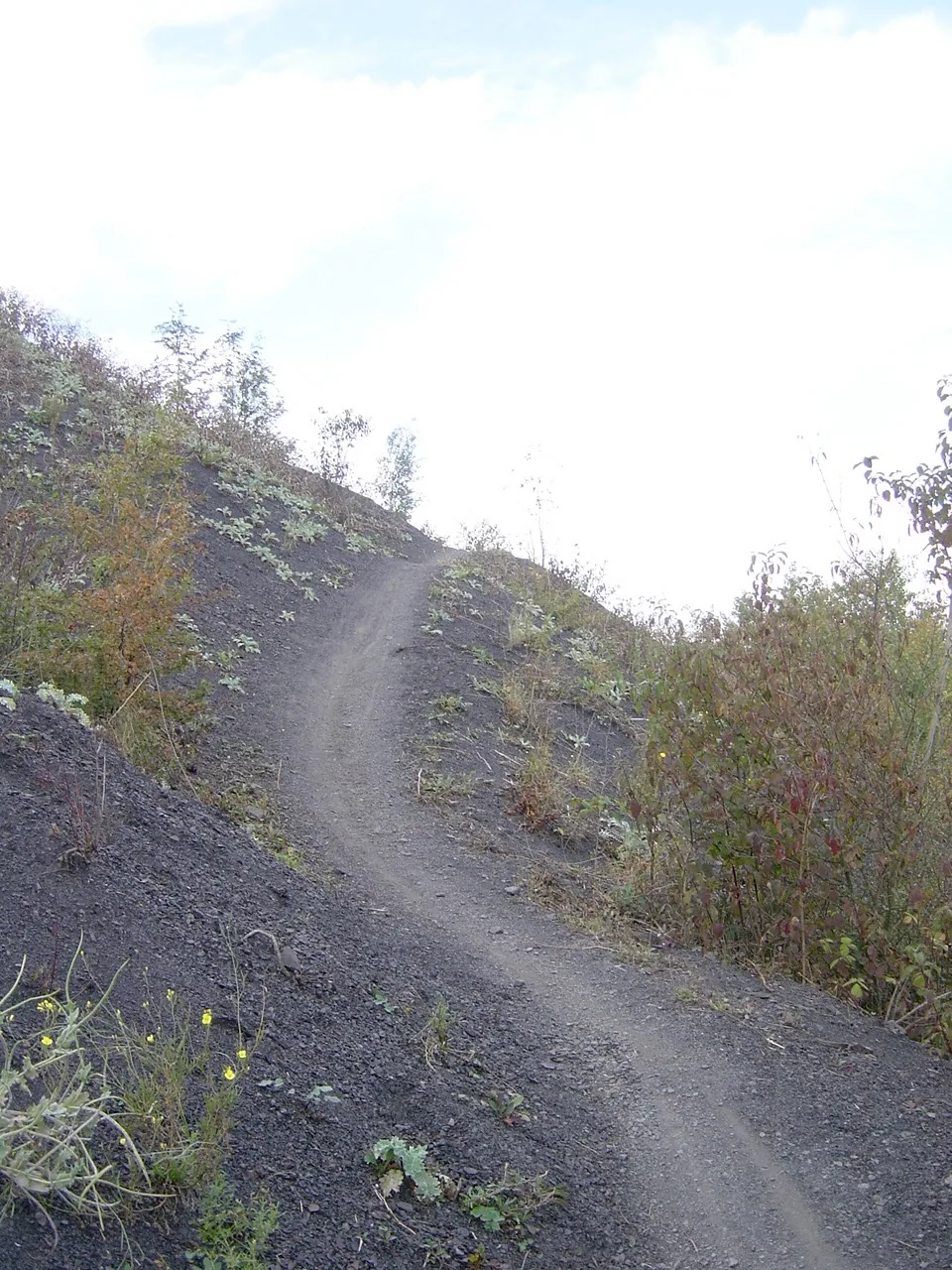
From Base 11/19, a green footbridge leads to the slag heap. The path then zigzags up through black shale, between birches and shrubs. Higher up, vegetation thins out. Only pioneer plants remain, able to grow on rock that heats up in the sun.

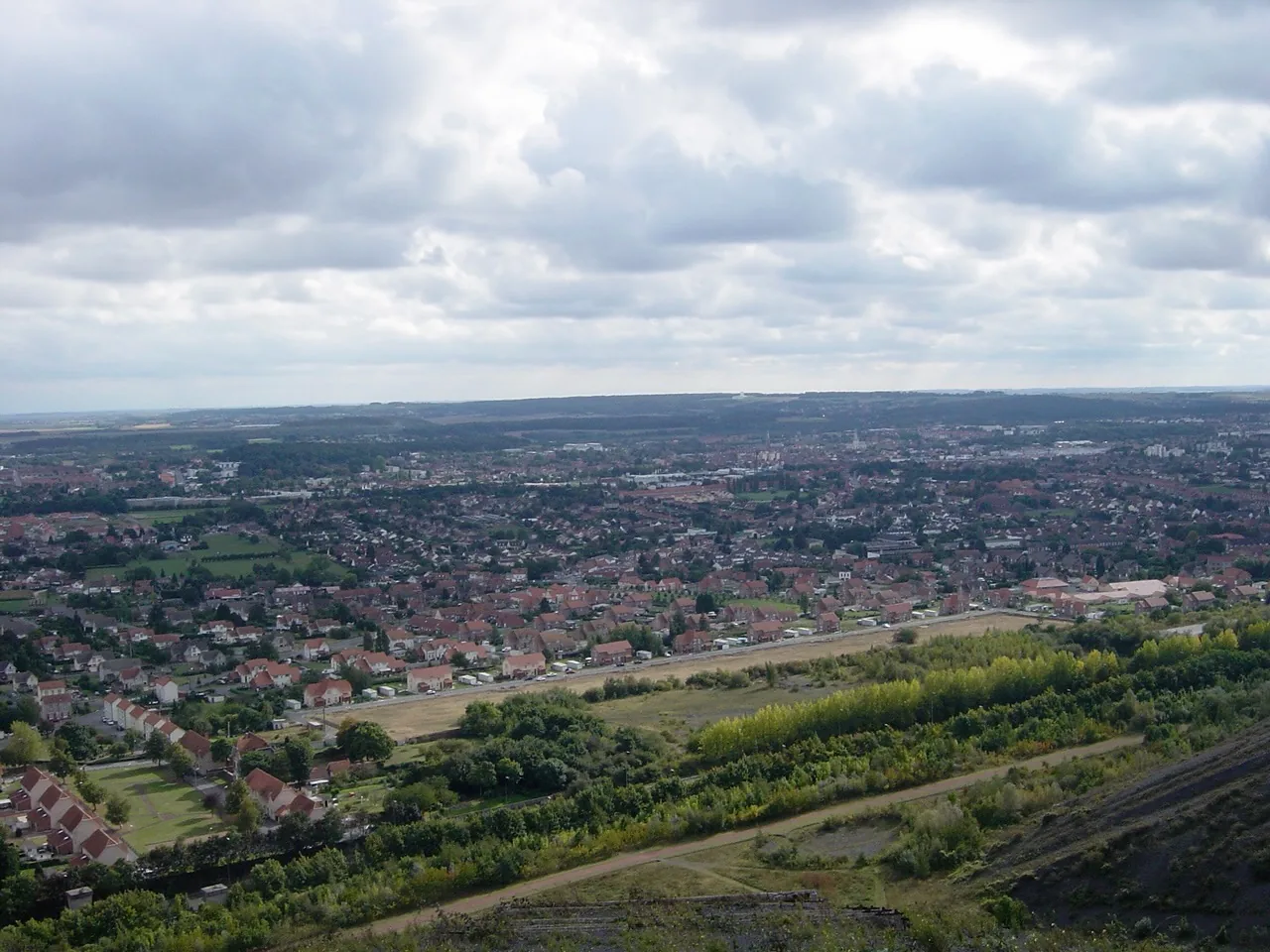
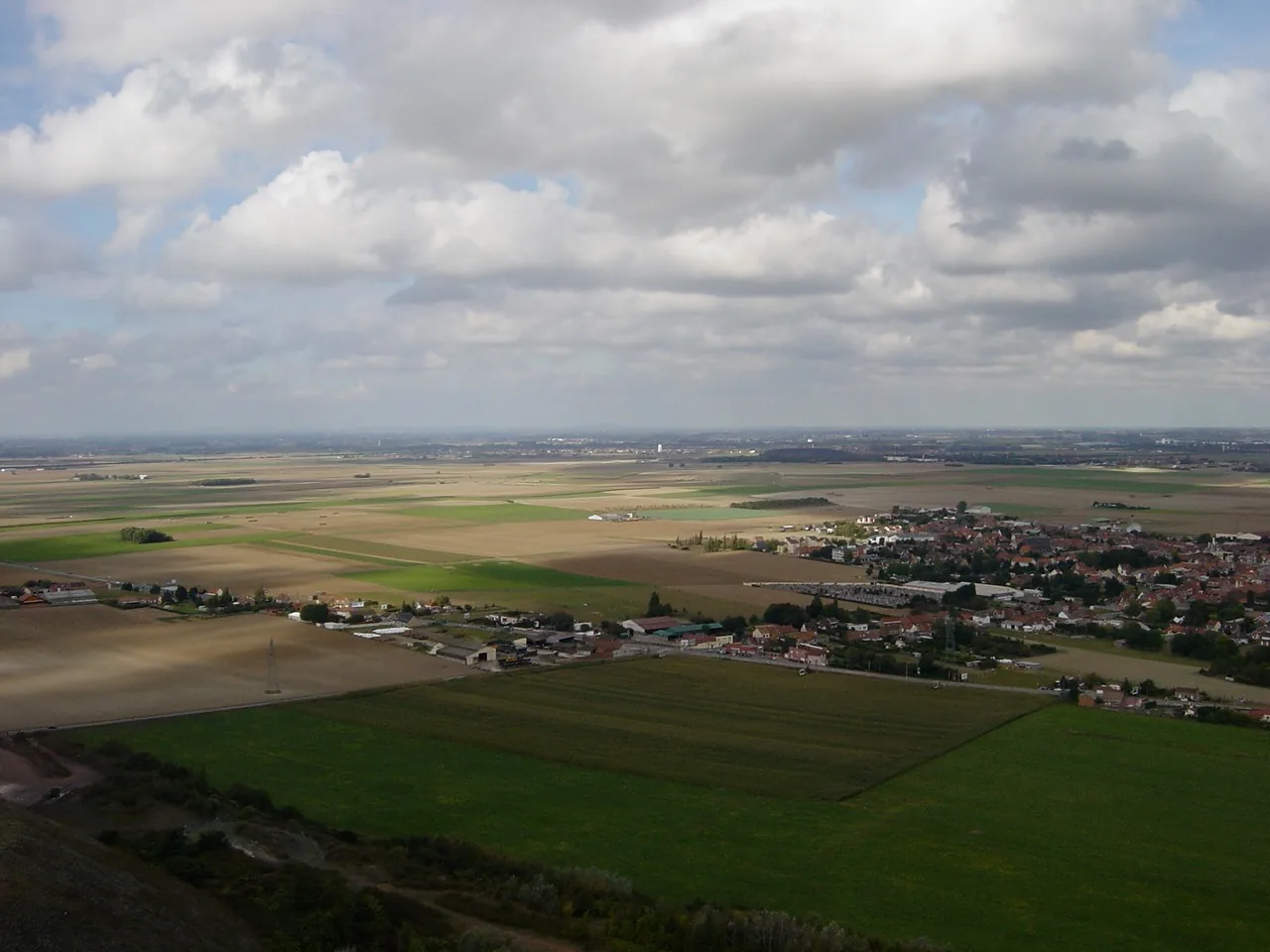
From the summit, the view takes in the whole basin: Lens and its estates, the tower of shaft 19 far below, the Artois plain and, on a clear day, Vimy Ridge. It is the best way to understand a landscape shaped by mining.
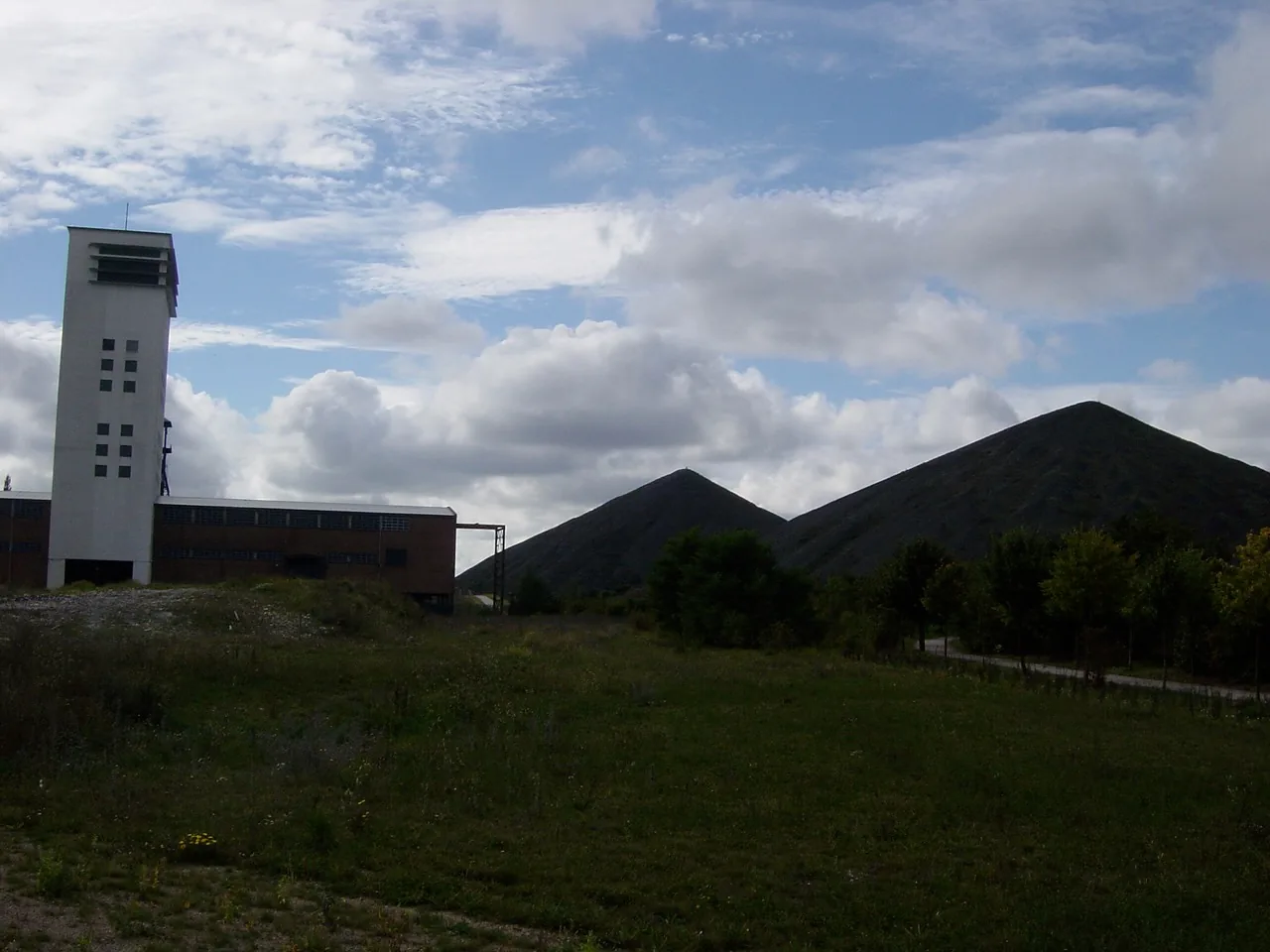
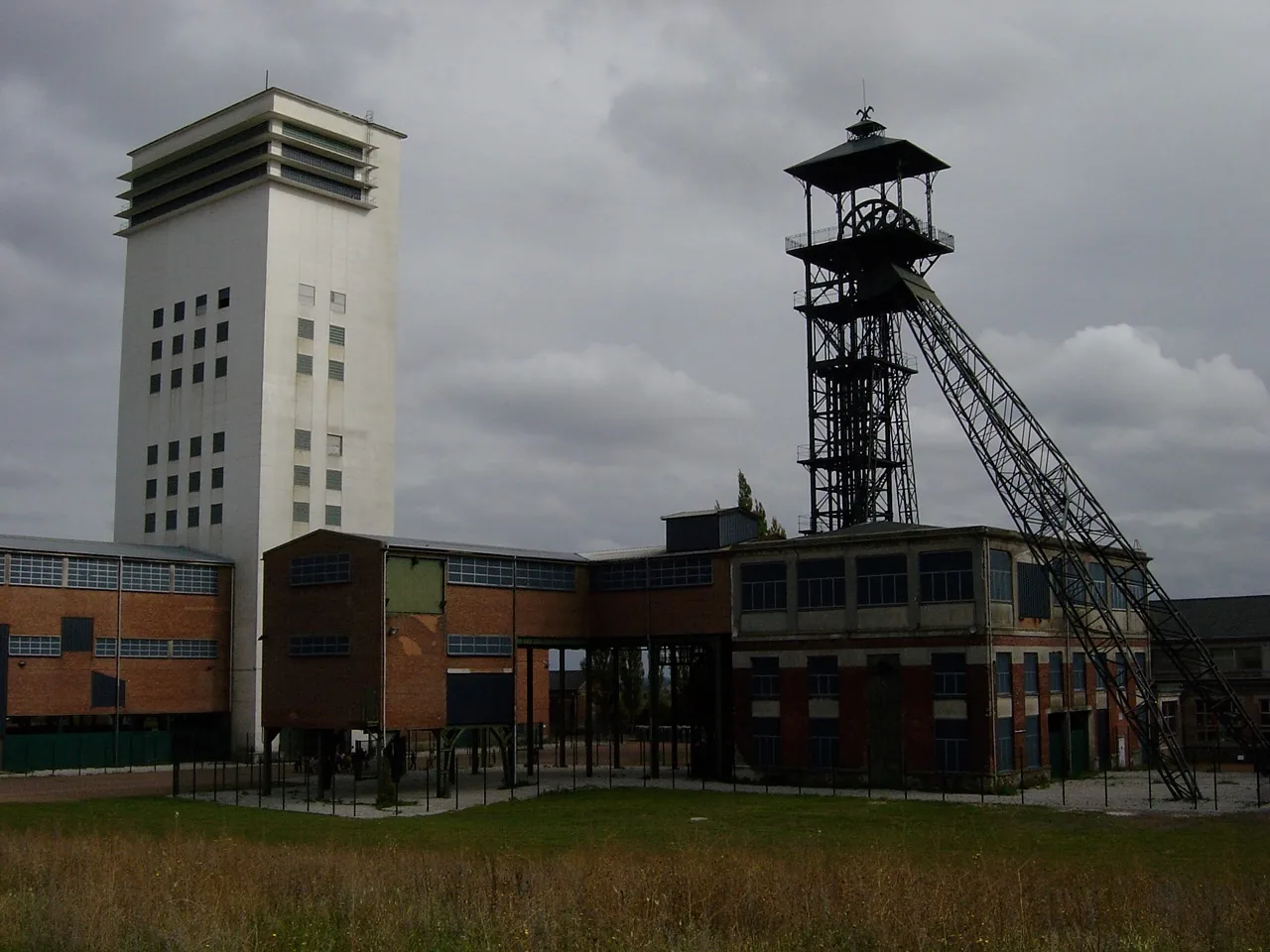
Photos of the 11/19 slag heaps: September 2005.
Walking on the slag heaps. The CPIE Chaîne des Terrils and the destinationterrils.eu website list the slag heaps open to the public and their routes. Stay on the paths: the shale slopes are unstable, and some slag heaps are still slowly burning. For cyclists, the Mining Basin cycle route (V31) starts in Lens.
Brick, gardens and bell towers

The miners' housing estates

Around each pit, the Company built a housing estate (cité): rows of brick houses with gardens, a school, a church, a clinic, sometimes a village hall. Miners lived there from cradle to retirement, in a world run by the Company.

Two of the Lens estates are part of the UNESCO site:

  • Cité 9, or Cité Saint-Théodore, the estate of the pit on which the Louvre-Lens now stands. Its church of Saint-Théodore, its school and the engineer's house now border the museum park.
  • Cité des Provinces, formerly Cité 11, between Lens and Loos-en-Gohelle, linked to the 11/19 pit. It has kept its school complex and the presbytery of its church of Saint-Pierre, demolished in 1987.

The easiest way to explore them is on foot from the Louvre-Lens. The estates begin at the end of the park, and the old colliery railway embankments (cavaliers) are now footpaths.

Mining vocabulary
  • Fosse (pit): a mining site with one or more shafts (the “11/19” combines shafts 11 and 19).
  • Chevalement (headframe): the tower over the shaft, with its sheave wheels guiding the cables.
  • Carreau (pithead yard): all the surface installations of a pit.
  • Cavalier: a colliery railway line, often on an embankment.
  • Gaillette: a lump of coal.
  • Galibot: a young miner.
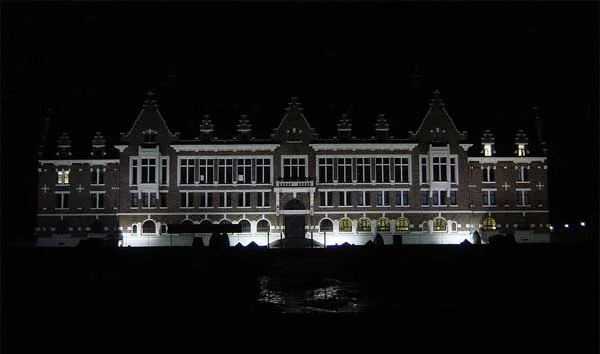
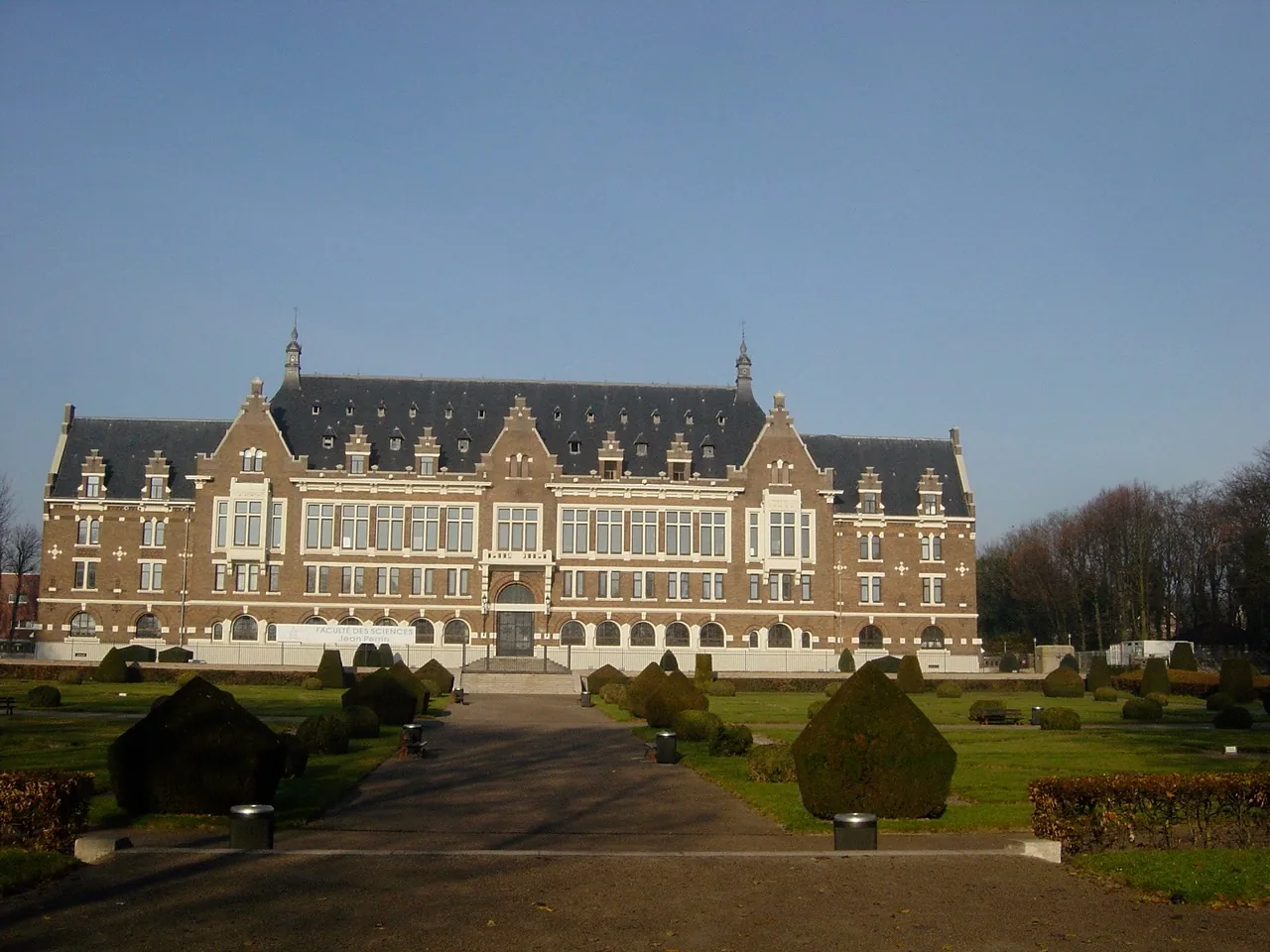
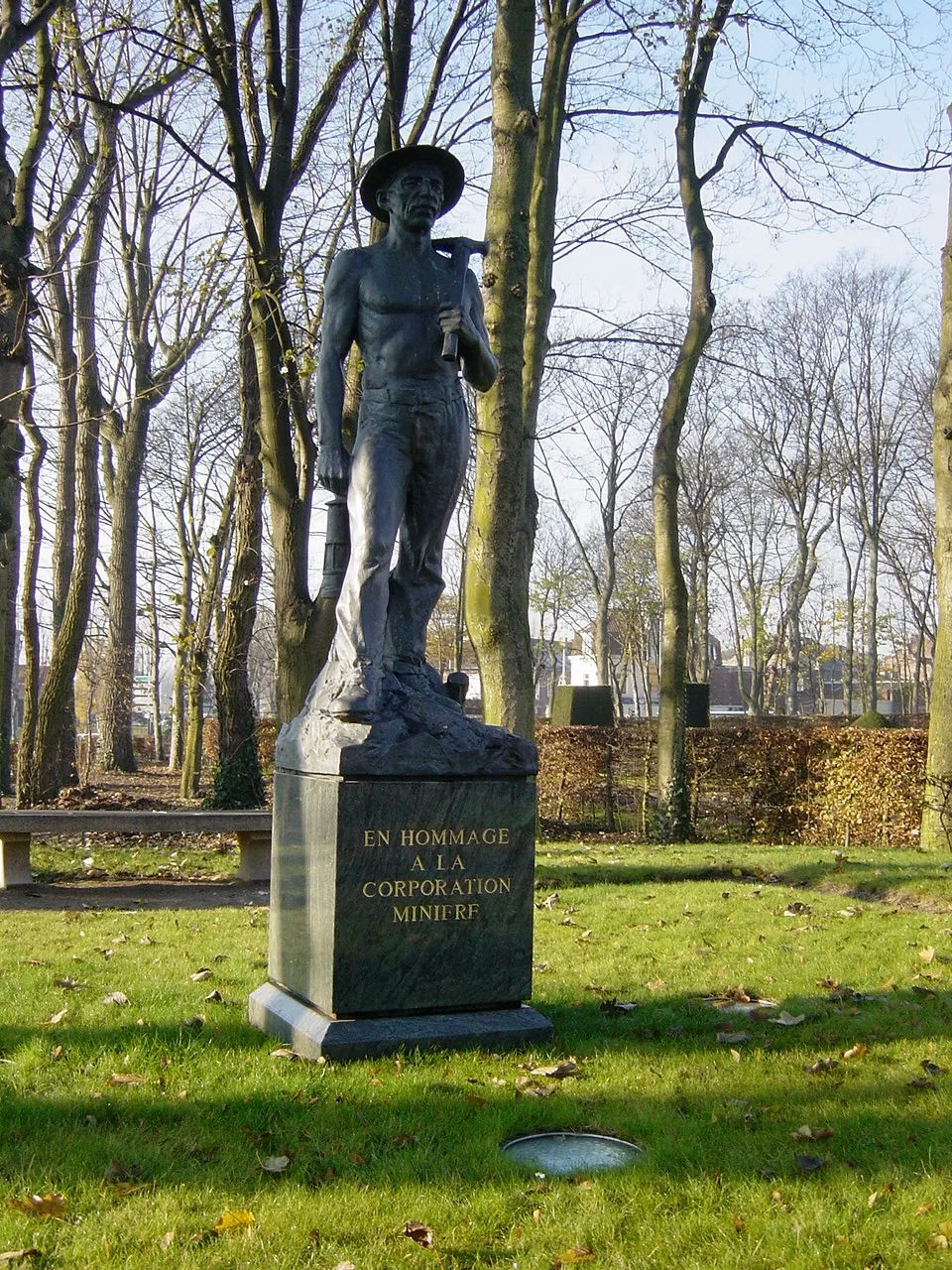
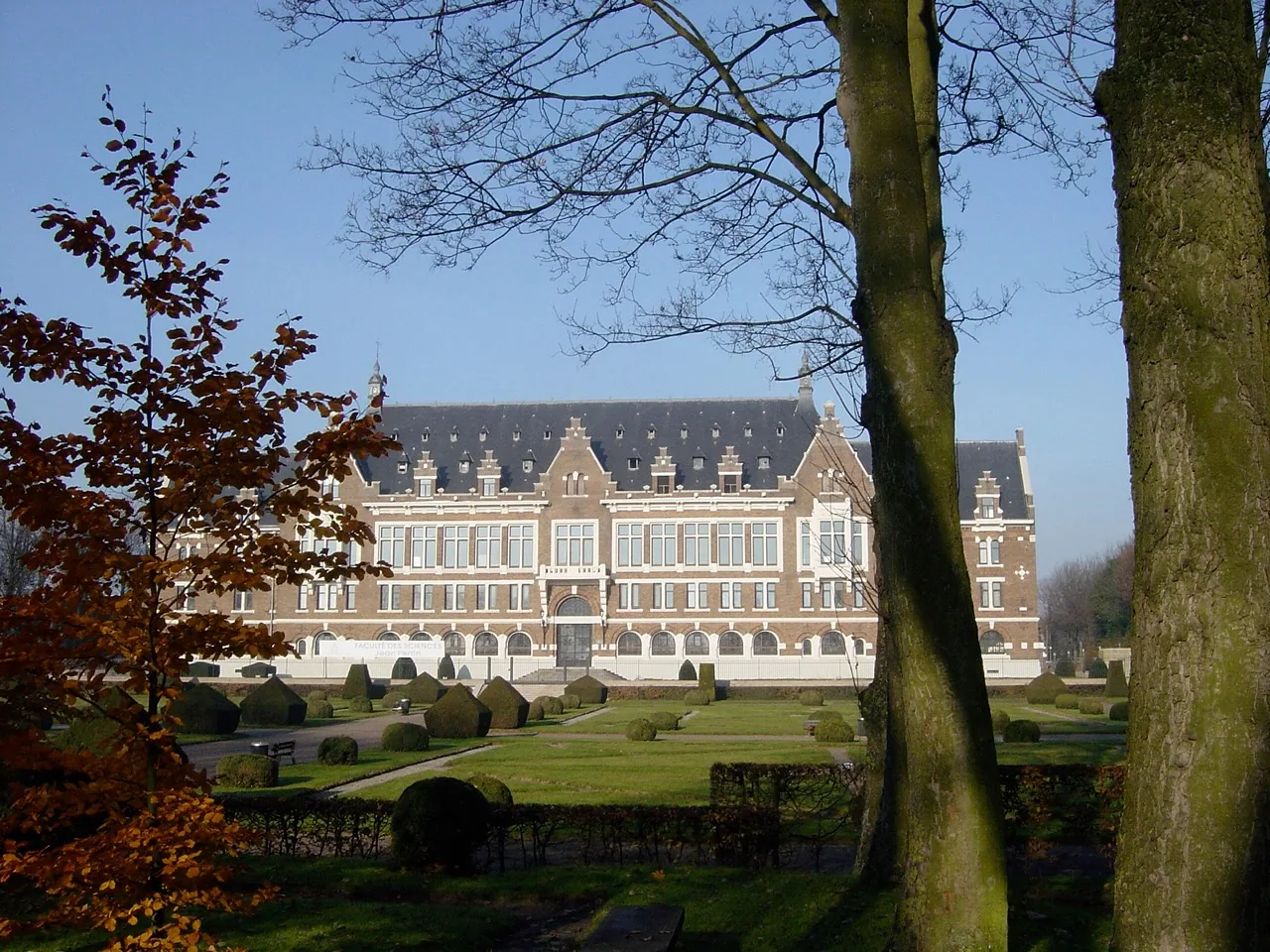
The Grands Bureaux of the Lens Mining Company, with a statue of a miner in the foreground The Grands Bureaux lit up at night
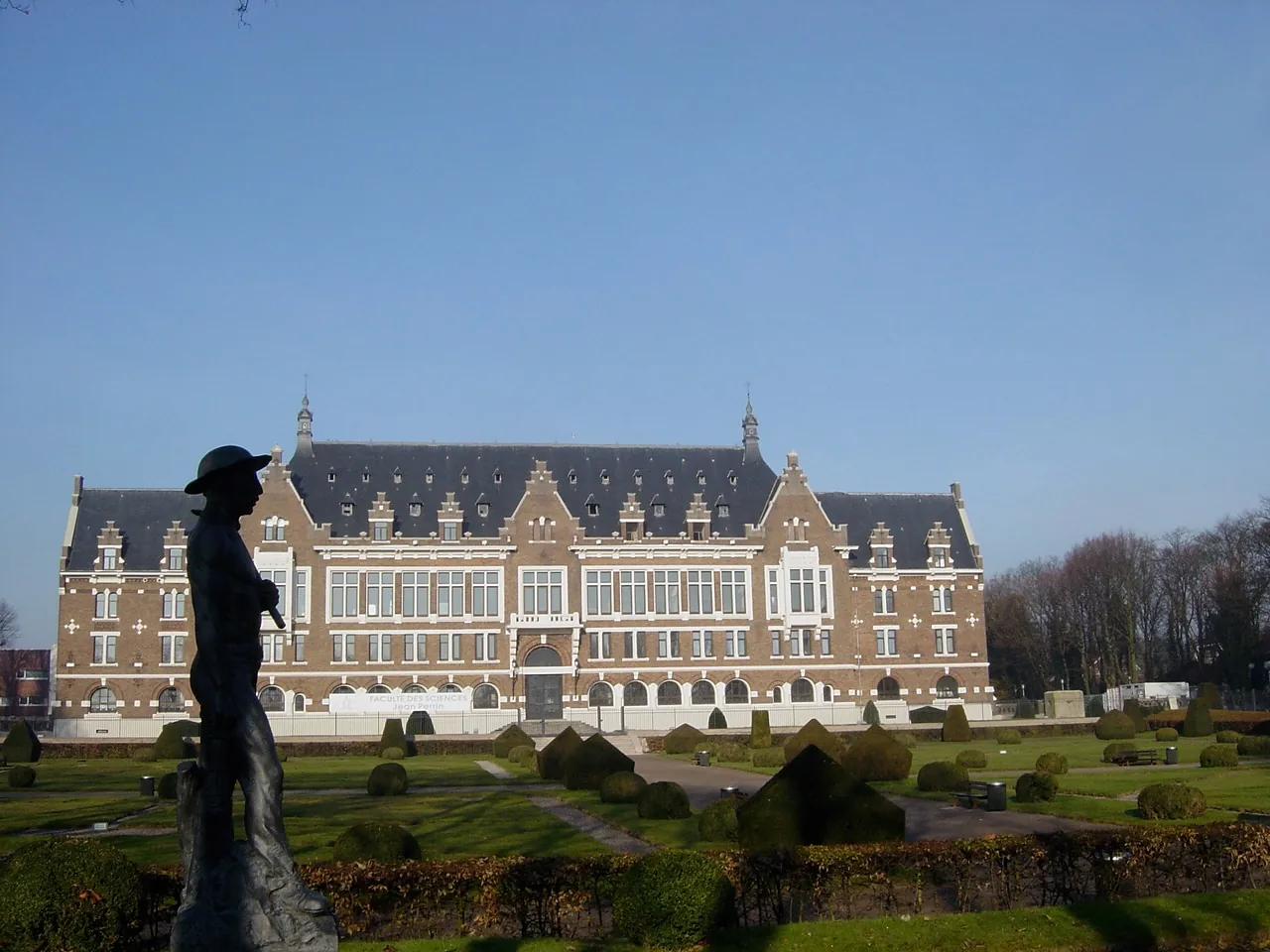
The Grands Bureaux, in December 2005 and by night.
Avenue Élie-Reumaux

The Grands Bureaux of the Mining Company

The Grands Bureaux (head offices of the Lens Mining Company) were the Company's château. Built from 1928 to 1930 by the Lille architects Louis-Marie Cordonnier, who designed Notre-Dame-de-Lorette, and his son Louis-Stanislas, they were meant to show the Lens Mining Company's restored power after the war.

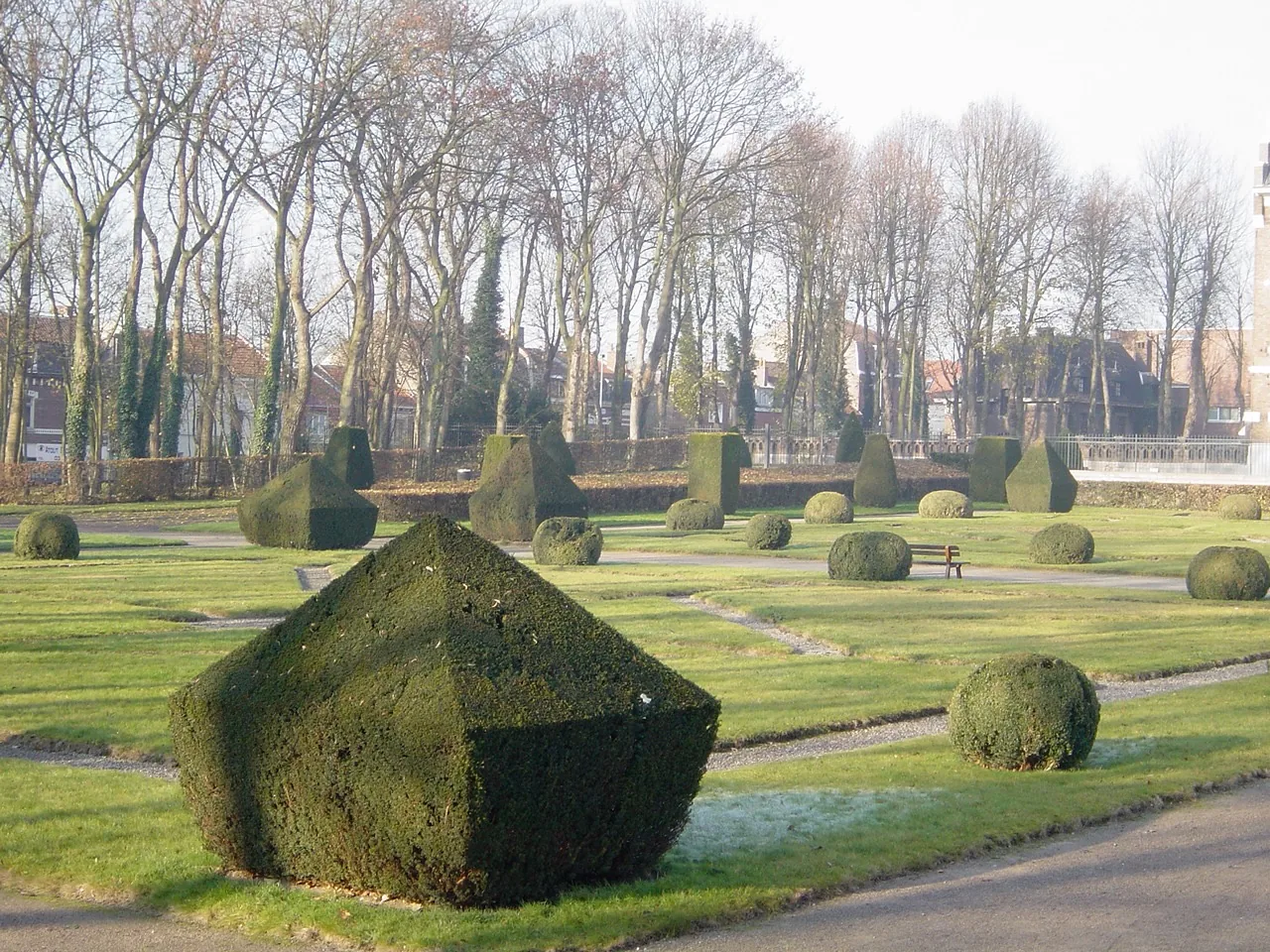
The brick and stone façade stretches over 80 metres, with tall gables and Flemish-style dormer windows. The interior is more modern, with Art Deco decoration. In front, the formal French garden was designed by the landscape architect Achille Duchêne.

Since 1991 the building has housed the Jean-Perrin Faculty of Science of the University of Artois. Part of it has been listed as a historic monument since 2009. The garden is open to view. The interior can only be seen on occasional guided tours, notably during the European Heritage Days.

Rebuilding in the 1920s

The locomotive station and Art Deco

Opened in 1927

Lens railway station

Look at it side-on: it is a steam locomotive. The architect Urbain Cassan designed a long, low building over 80 metres long, with no upper floor so it could withstand mining subsidence. The 23-metre clock tower stands in for the chimney.

Inside, mosaics by Auguste Labouret tell the story of the railway and the mine. The ironwork is by Edgar Brandt. It is one of the finest Art Deco stations in France.

Consecrated in 1926

The church of Saint-Léger

The old church was destroyed in 1916. The new one almost exactly reproduces its outline, but in lighter reinforced concrete, to better withstand mining subsidence. It towers over the town centre, a stone's throw from Place Jean-Jaurès.

Rue Casimir-Beugnet · opened in 1911

The Maison syndicale des mineurs (Miners' Union House)

It was born of the anger that followed the Courrières disaster of 1906, and the miners paid for it themselves. Destroyed during the war, it was rebuilt almost identically and reopened in 1926. With its speaker's balcony and its bas-relief of three miners, it is one of only three miners' union houses in France.

An Art Deco walk. From the station to Place Jean-Jaurès, look up: ironwork, mosaics, ceramics and canted façades tell the story of the town in the 1920s and 1930s. The tourist office runs guided tours, notably during the Printemps de l'Art déco (Art Deco Spring) in April and May.
Blood and Gold

Stade Bollaert-Delelis

Here too, the mine is never far away. The Company bought the land in 1929, miners helped build it, and the stadium opened in 1933 was named after Félix Bollaert, chairman of the Company's board. The name of André Delelis, a former mayor, was added in 2012 after his death.

Racing Club de Lens (RC Lens), nicknamed the “Sang et Or” (Blood and Gold), was founded in 1906 and became French champions in 1998. Its colours and its supporters are part of the town's identity. Bollaert hosted Euro 1984, the 1998 World Cup and Euro 2016. With more than 38,000 seats, it can hold more people than live in Lens.

The Bollaert Tour takes you into the dressing rooms, the press room and pitchside. Book through the tourist office.

1906RC Lens founded
38,223seats at Bollaert
1998French champions, and World Cup matches in Lens
The price of coal

Remembering the mine

10 March 1906 · Courrières, Méricourt

The Courrières disaster

A coal-dust explosion tore through more than a hundred kilometres of tunnels, officially killing 1,099 miners. It remains the worst mining disaster in Europe. Twenty days later, thirteen survivors made their own way out of the mine. The unidentified victims lie in the mass grave at Méricourt, known as “le Silo”.

27 December 1974 · Liévin

The Liévin disaster

A firedamp explosion at pit 3 in Liévin killed 42 miners. It was the deadliest disaster in French mines since the war, at a time when the basin was already closing down. A memorial stone recalls the tragedy, and a ceremony is held every 27 December.

Every year, around 4 December, St Barbara's Day, the miners' festival in honour of their patron saint, is celebrated at the mining sites of Lens-Liévin with fire and light shows. The Louvre-Lens itself was opened on a 4 December.

Going underground

Mining museums

Paid entry Lewarde (Nord) · 35 km · 40 min

Centre historique minier de Lewarde (Mining History Centre)

Set on the pithead yard of the former Delloye pit, worked until 1971, this is France's main mining museum. Open since 1984, it welcomes more than 150,000 visitors a year. The guided tour of the reconstructed galleries, included in the ticket, shows what work underground was like, from the pickaxe to the coal-cutting machines.

chm-lewarde.com ↗

UNESCO Oignies · 20 km

9-9bis

A pit preserved as it was, with its headframes and engine house. Former miners still maintain the winding engines. The site also has a concert venue, the Métaphone, whose façade lights up. Short, inexpensive guided tours.

9-9bis.com ↗