Twenty minutes takes you from the slag heaps to the Flemish squares of Arras. An hour and a half, and you reach the cliffs of the Channel. A quick tour of what is worth the detour.
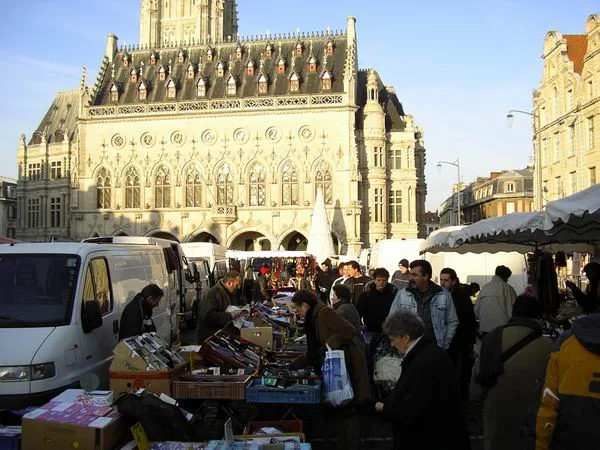
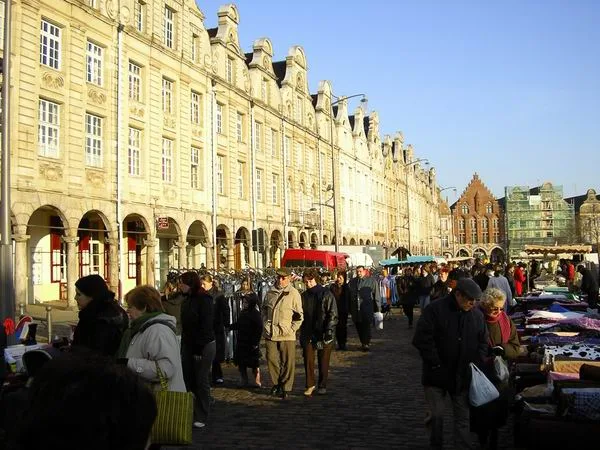
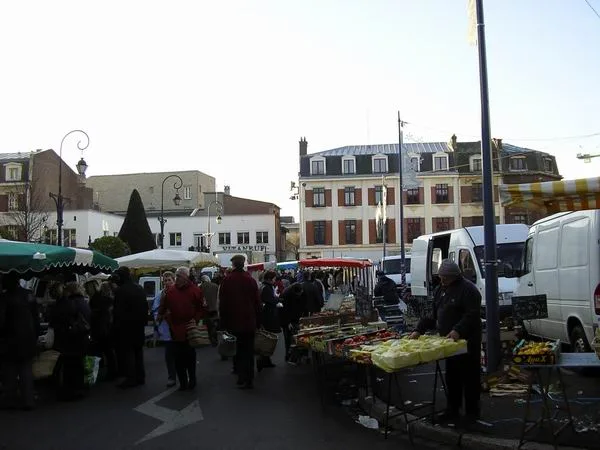
Arras was shelled throughout the First World War, and its centre was rebuilt exactly as it had been. The result is striking: the Grand'Place and the Place des Héros are lined with 155 Flemish Baroque façades, resting on 345 sandstone columns. On Saturday mornings the big market spreads across the squares.
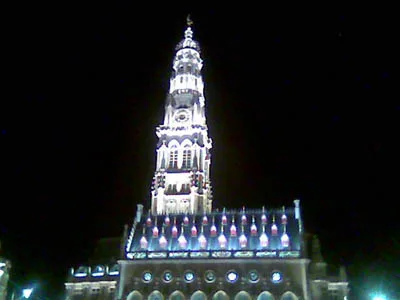
Above them rises the 75-metre belfry. Begun in the 15th century and completed in 1554, it was destroyed in October 1914 and rebuilt between 1927 and 1931. Since 2005 it has been a World Heritage Site, together with the other belfries of Belgium and France. A lift and a few steps take you to the top for a view over the whole town.
Beneath the cobbles lie the boves, old underground chalk quarries dug from the Middle Ages onwards. Tours start from the tourist office in the town hall. Their extension, Wellington Quarry, tells the story of the 1917 Battle of Arras.
Built between 1668 and 1672 in the shape of a five-pointed star, it is nicknamed “la Belle Inutile” (the Beautiful Useless one) because it was never besieged. Now demilitarised, it is open to wander freely. It also hosts the Main Square Festival in July and is home to the Wall of the Executed.
Walk up rue Maximilien-de-Robespierre, formerly rue des Rapporteurs, to no. 9, where Robespierre lived from 1787 to 1789. Make a detour via the Abbey of Saint-Vaast and the cathedral. Finish in the Jardin du Gouverneur and the Jardin Minelle, with its spring-fed lake.
Housed in the vast Abbey of Saint-Vaast, the fine arts museum is closed for a complete renovation. It is due to reopen in 2030. The works can sometimes be visited during the European Heritage Days.
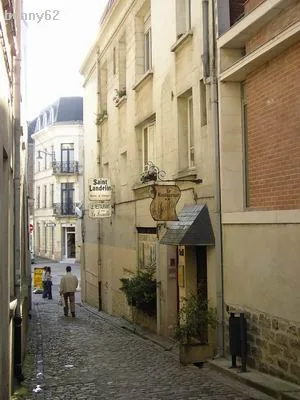
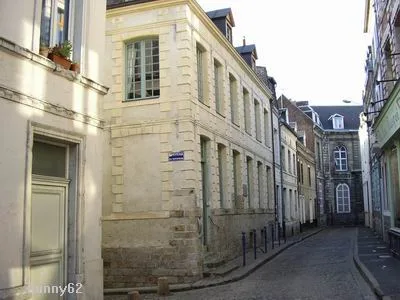
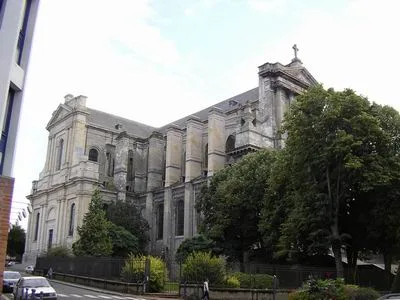
Begun in 1380, the Douai belfry is one of the finest in northern France: a Gothic tower some sixty metres high, bristling with turrets and housing a 62-bell carillon. In 2024 it came second in France's “Favourite Monument” TV contest, after beating… the Stade Bollaert. Guided tours every day.
Also worth seeing: the Musée de la Chartreuse, set in a former monastery, with paintings by Veronese, Rubens and Courbet.
In mid-July, from the Sunday after 5 July, the Gayant festivities parade the town's giant (more than 8 metres tall) and his family through the streets. They are on UNESCO's list of Intangible Cultural Heritage, along with the other processional giants of Belgium and France.
Béthune's centre was 90% destroyed in 1918. Only its 14th-century belfry, 47 metres tall and also UNESCO-listed, and a few houses survived. Around it, the Grand'Place was rebuilt in the 1920s with a remarkable variety of regional-style and Art Deco façades, each reconstruction architect leaving their own mark.
In the former Banque de France branch, Labanque shows contemporary art, making playful use of the old vaults. Entry is free for under-26s and on the first Sunday of the month.
The coalfield is greener than you might think: slag heaps, old railway embankments and subsidence ponds now form a “chain of parks” covering more than 4,000 hectares.
Eden 62 manages more than 6,000 hectares of protected natural areas in the department, including the Pinchonvalles slag heap. Its guided nature walks are free.
A 15-hectare animal park with more than 350 animals from around 80 species, play areas and walking paths. Ideal with children.
A woodland country park with treetop adventure courses, a swimming pool, golf and camping. You can cycle there from Liévin along EuroVelo 5.
EuroVelo 5 (Via Romea Francigena), the V32 Lille–Paris route and the Mining Basin cycle route (V31) meet around Lens. The local authority also offers circuits “around the Louvre-Lens”.
A giant indoor arena that hosts an international indoor athletics meeting every February, and big concerts all year round.
Skiing on a slag heap and cable wakeboarding on the lake next door. See Mining heritage.
No restaurant listings here: they change too quickly. Instead, here is what to try.
There is more to the Pas-de-Calais than the coalfield. An hour and a half from Lens via the A26, the Opal Coast offers one of the finest coastlines in France, and one that is too often overlooked.
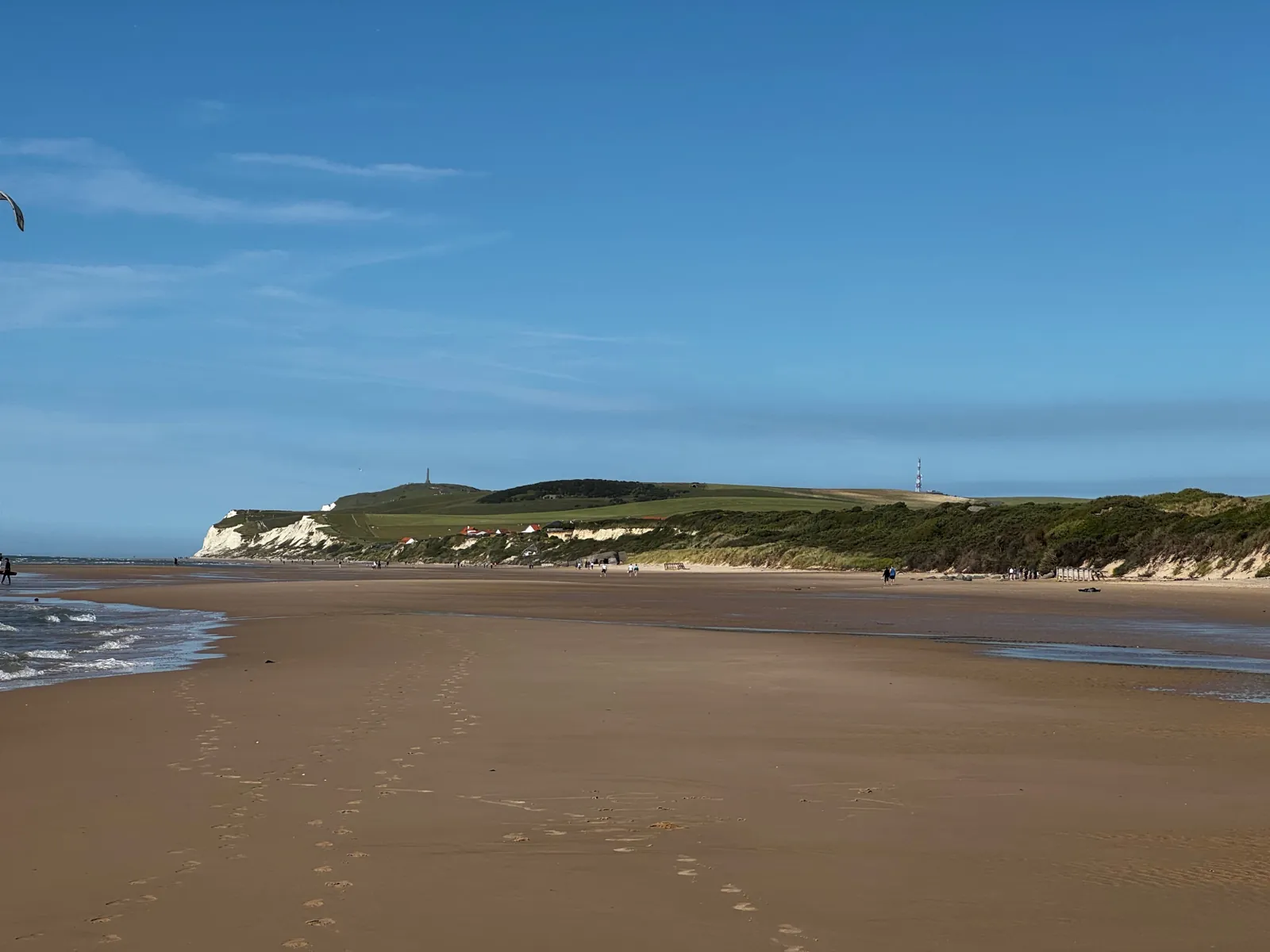
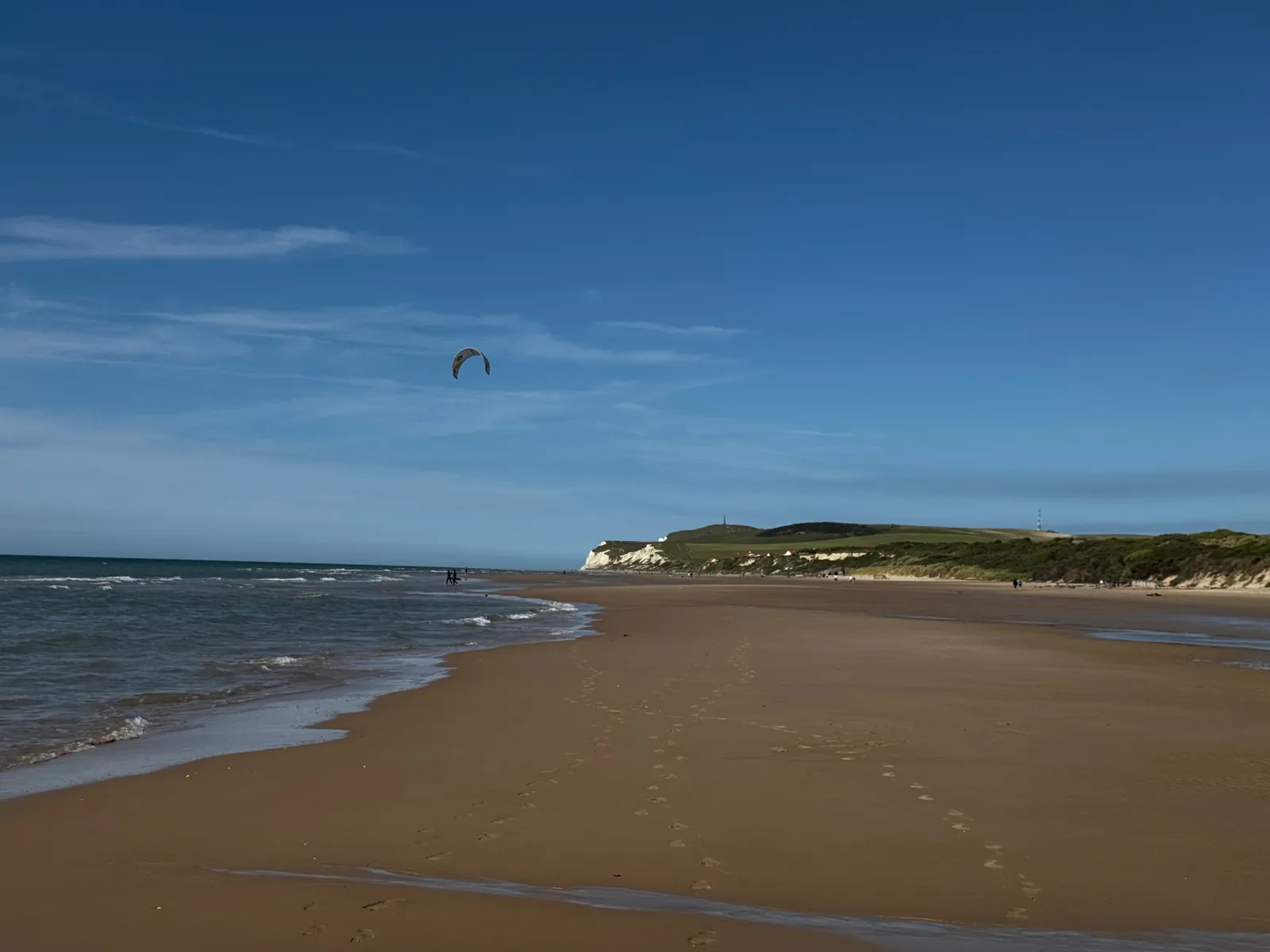
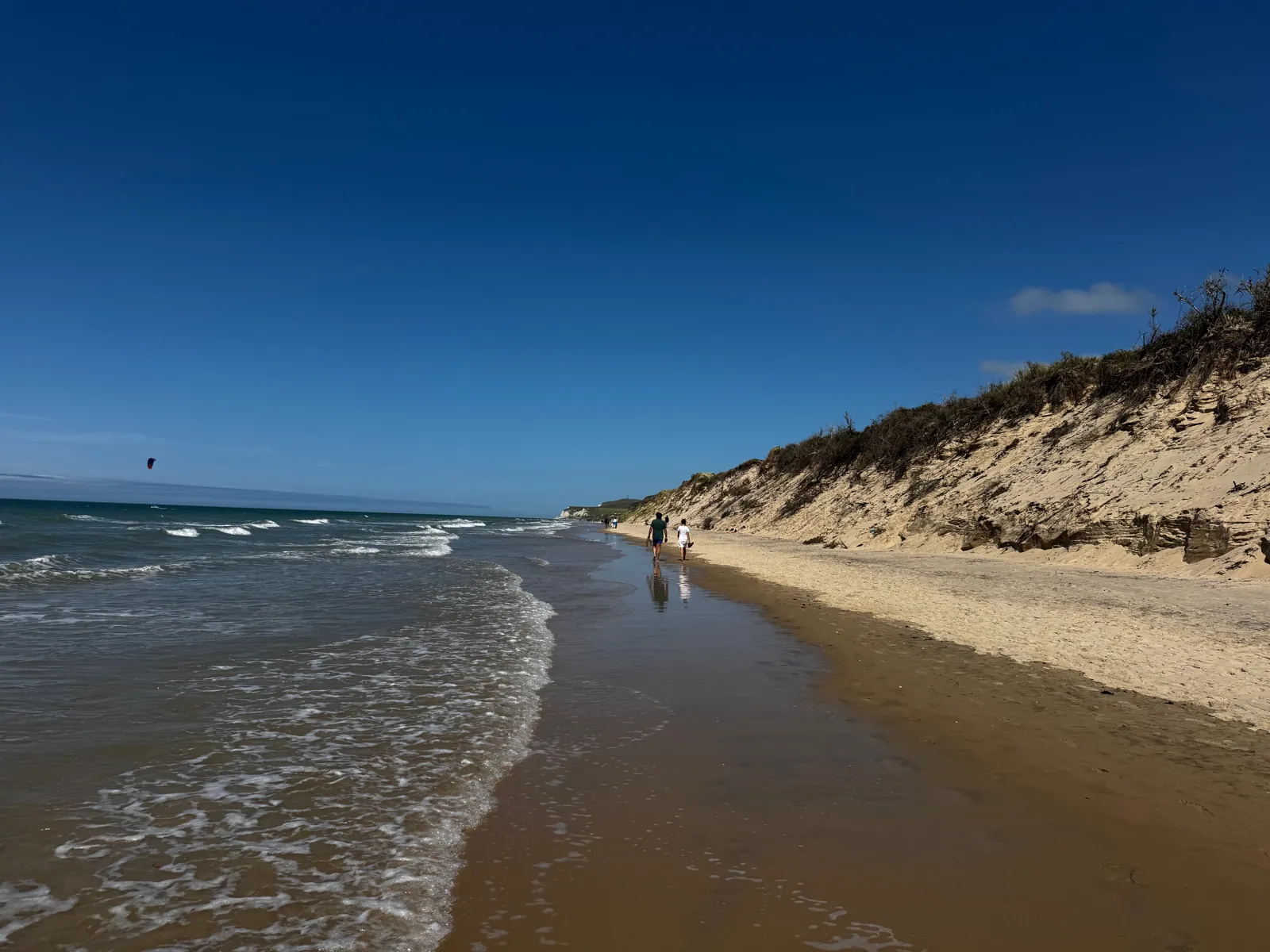
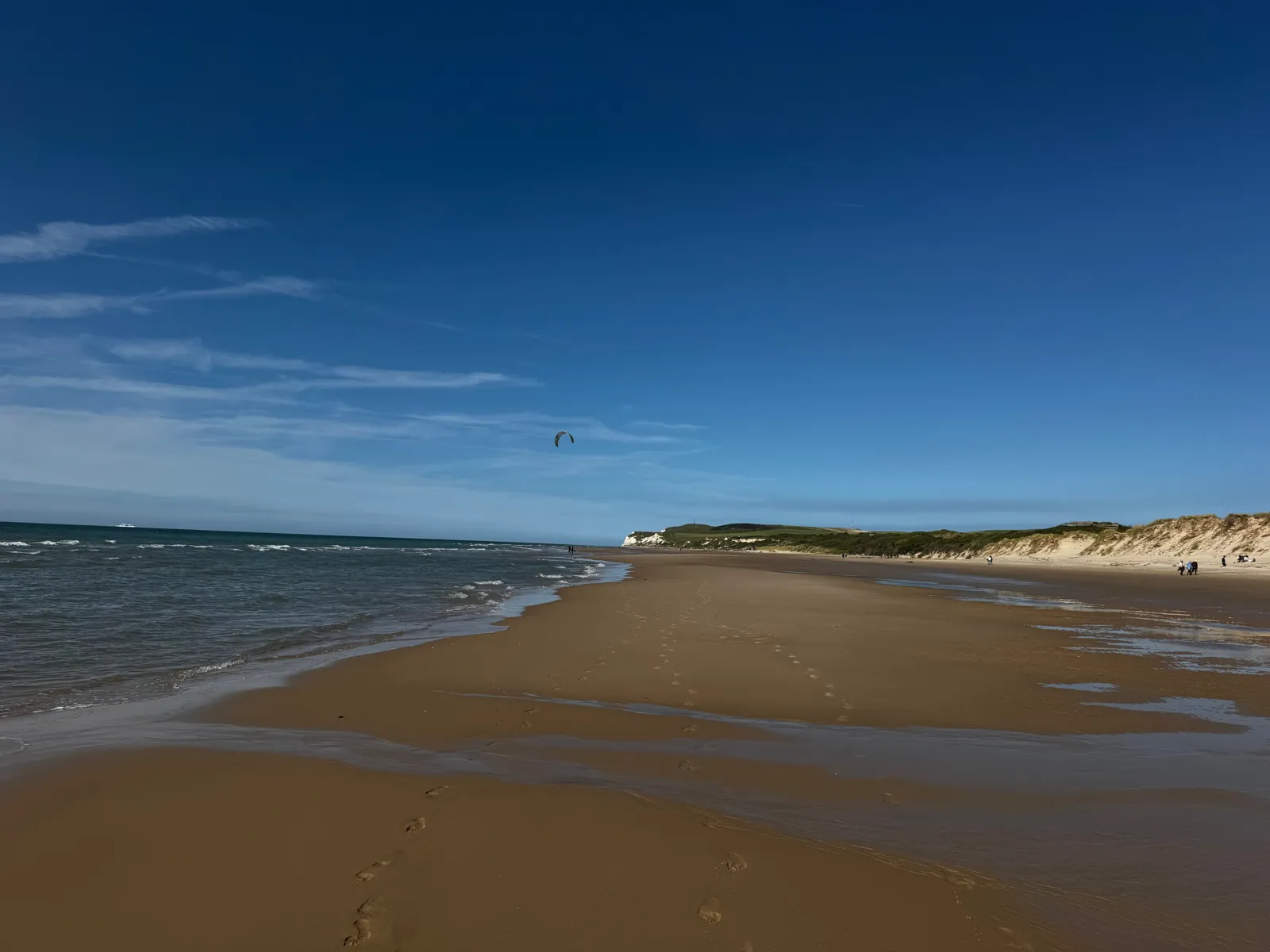
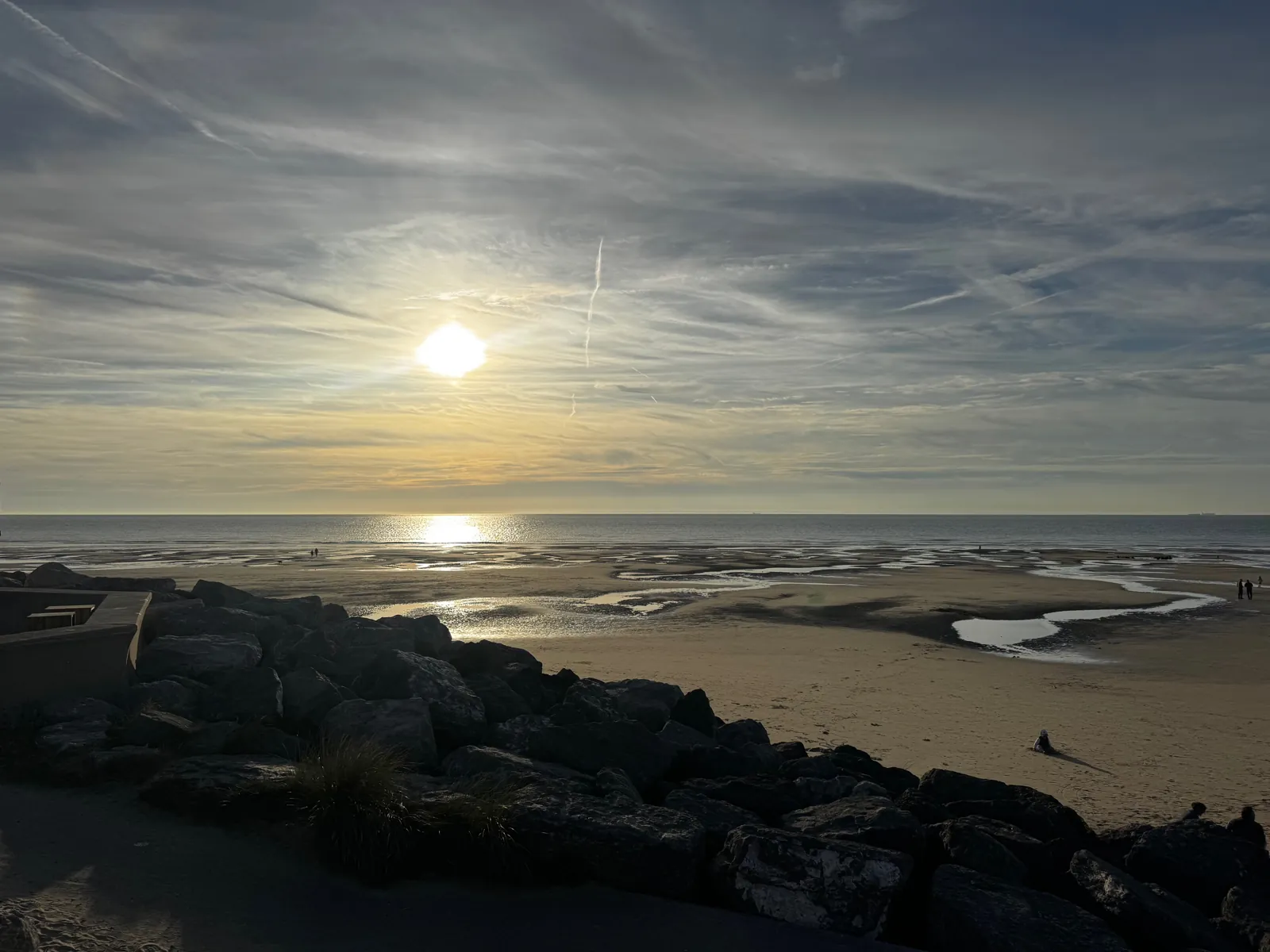
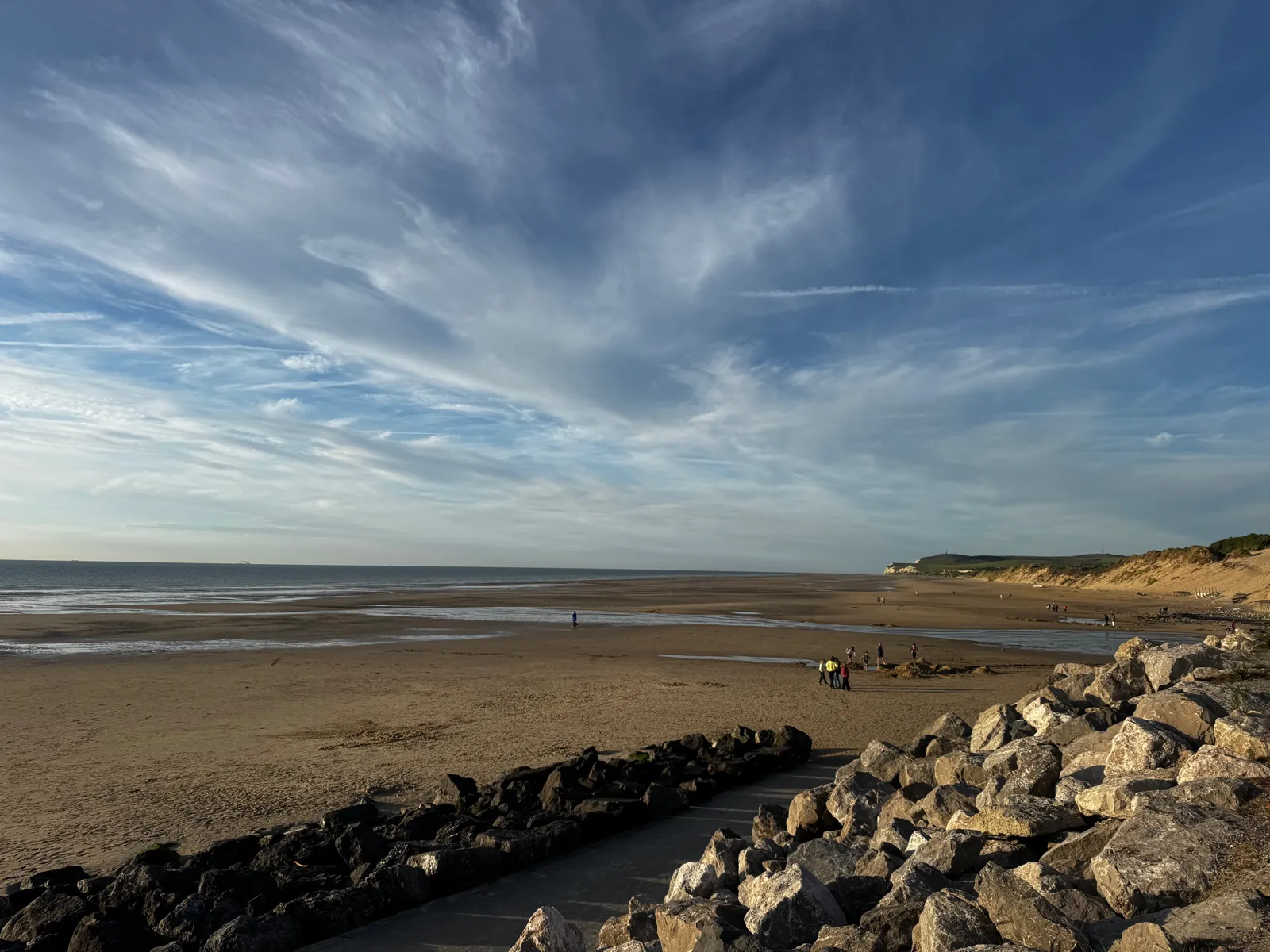
Between Calais and Boulogne, the Grand Site de France des Deux-Caps, awarded the label in 2011, protects 23 kilometres of coast:
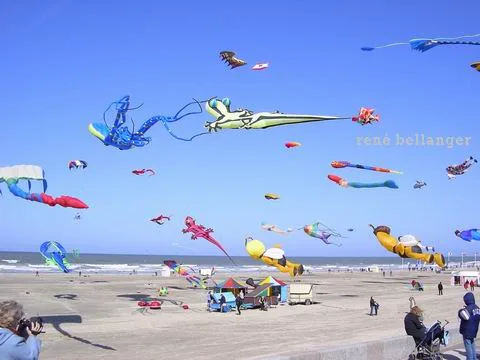
Further south, Berck hosts its international kite festival in spring, and Le Touquet its famous motorbike and quad race on the beach, the Enduropale, in February.


Wissant photos: May 2025.